

The Selune Crystal Drop Collection combines elongated crystal forms with warm metallic details across sconces, pendants and chandeliers. Choosing the right fixture depends on more than appearance: room function, furniture shape, ceiling height and overall scale all influence how the light will feel once installed. This guide compares the key Selune formats and explains where each design works best.
1. Quick Answer: Which Selune Crystal Light Should You Choose?
The easiest way to choose a Selune crystal light is to begin with the room and the architectural role the fixture needs to play. The collection carries the same elongated crystal-drop language through compact wall lighting, individual pendants and larger chandelier compositions, making it easier to create a coordinated look across different spaces.


For a compact decorative accent, consider a crystal wall sconce or single pendant. Choose a cascade configuration when the room benefits from vertical movement, such as a foyer or stairwell. Above a rectangular dining table or kitchen island, a linear crystal chandelier typically creates the most balanced relationship between the fixture and the furniture below.
2. What Makes Selune Crystal Lighting Different
The defining element of the Selune collection is its elongated crystal drop. Rather than relying on dense layers of small crystal pieces, the design uses pronounced vertical forms with visible space between them. Each crystal reads as an individual decorative element, while repetition creates rhythm, depth and a stronger architectural presence.

Elongated Crystal Drops
The slender crystal profile and open negative space give Selune a lighter visual character than many traditional crystal chandeliers. Clear crystal catches both daylight and electric light. The warm metal frame keeps the fixture from reading too cool or glass-heavy. The result is decorative without feeling overly dense, making the collection especially suited to contemporary, transitional and quiet-luxury interiors.
3. Compare Key Selune Lighting Designs

Selune Crystal Drop Wall Sconce 21"H
View Product
Selune Crystal Drop Pendant 15"H
View Product
Selune Crystal Drop Multi-Light Pendant 5"D
View Product
Selune Crystal Cascade Chandelier 17"D
View Product
Selune Crystal Cascade Chandelier 36"D
View Product
Selune Crystal Linear Chandelier 37"W
View Product4. Selune Crystal Lighting Comparison Guide
| Fixture | Selected Sizes | Visual Direction | Choose It When |
|---|---|---|---|
| Wall Sconce | 21"H | Vertical | You need a compact wall accent |
| Single Pendant | 15"H | Vertical | You need one focused decorative point |
| Multi-Light Pendant | 5"D | Vertical Cluster | You want several drops in one composition |
| Round / Cascade Chandelier | 17"D / 24"D / 36"D / 48"D | Vertical / Central | The room has meaningful vertical volume |
| Linear Chandelier | 37"W / 50"W / 60"W | Horizontal | Furniture follows a long horizontal axis |
Product dimensions and available configurations may vary by model. Review the individual product specifications before ordering or planning installation.
5. Round vs. Linear: Choosing the Right Shape
The main difference between round and linear crystal chandeliers is how they relate to the furniture and architecture beneath them. Round and cascading designs establish a central or vertical focal point, while linear fixtures emphasize length and horizontal balance. Consider the shape of the surface, the ceiling height and the visual weight of the fixture before deciding.

Centered & Vertical
Choose a round or cascading form when the room or furniture has a clear center point. Round dining tables, square tables, foyers and open stairwells generally benefit from a fixture that concentrates visual weight toward the center. For dining applications, a chandelier around one-half to two-thirds of the table width can serve as an initial reference, but ceiling height, fixture volume and the openness of the crystal composition should guide the final scale.

Extended & Horizontal
Choose a linear form when the furniture has a strong horizontal axis. Rectangular dining tables and kitchen islands usually look more balanced when the fixture follows the same direction. As a starting point, keeping the fixture within roughly two-thirds of the surface length can help maintain visual proportion without allowing the light to overpower the furniture below.
6. The Best Selune Light for Every Room
Once the fixture shape is established, consider how the light relates to the room itself. Furniture proportions, ceiling height and viewing distance should guide the final Selune configuration.
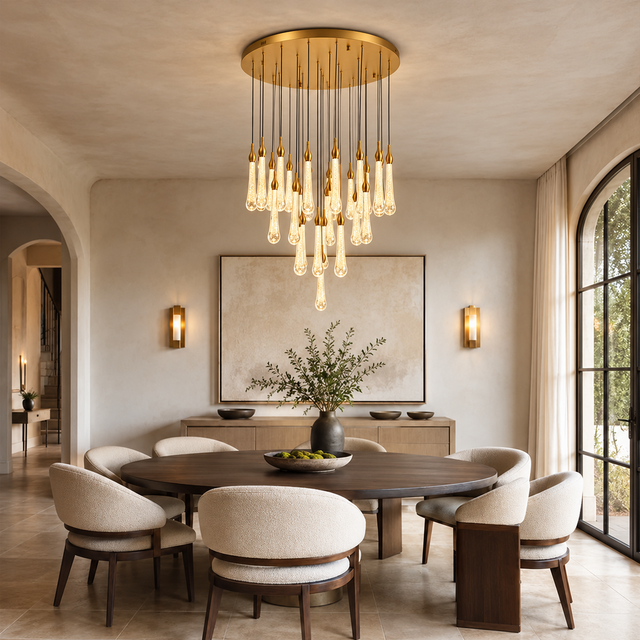
Dining Room
A round chandelier creates a natural focal point above the dining table, while its diameter and visual weight should remain balanced with the table's proportions.

Kitchen Island
A linear fixture can follow the length of the island, while its placement and proportions should leave adequate clearance for food preparation and everyday movement.
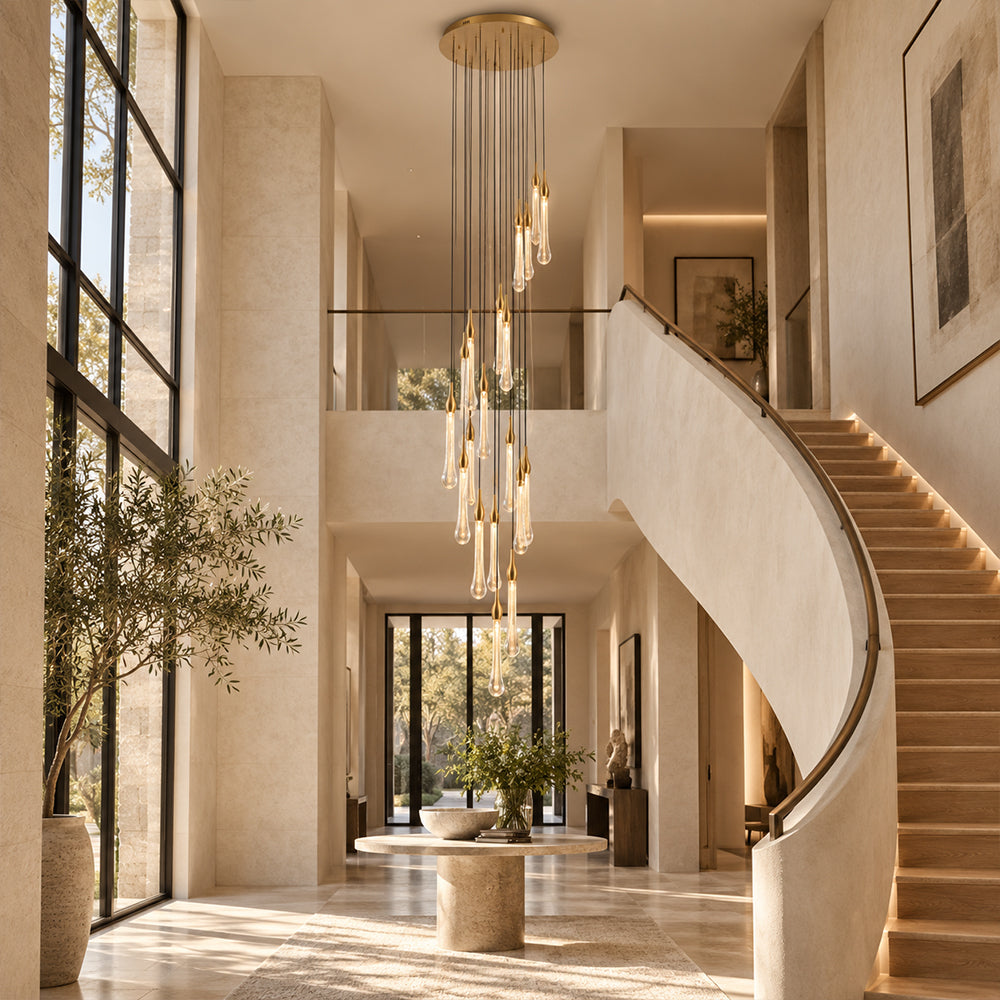
Foyer & Staircase
A cascade chandelier draws the eye through a double-height foyer or open staircase. Consider its overall hanging length, viewing angles and clearance around stairways and walkways.

Bedroom & Hallway
Crystal wall sconces add a decorative layer without taking up floor or table space. Their placement should relate to the wall layout, nearby furniture and the room's existing lighting.
7. How to Care for Selune Crystal Lighting
Regular, gentle cleaning helps preserve the clarity of the crystal and the appearance of the metal finish. Always follow the care instructions provided with the individual fixture, particularly before handling suspended crystal components.
- Turn the fixture off and allow it to cool completely before cleaning.
- Use a soft, clean microfiber or lint-free cloth for regular dusting.
- Do not spray cleaner directly onto the crystal or metal components.
- Avoid abrasive pads, harsh chemicals and excessive moisture.
- If any suspended hardware or crystal connection appears loose, discontinue use and have the fixture checked by a qualified installer or electrician.
8. Selune Crystal Lighting FAQ
Can Selune crystal pendants be used over a kitchen island?
Yes. Single and multi-light pendants can both be considered for a kitchen island, depending on its length, layout and lighting needs. Compare the fixture's dimensions, placement and spacing with the usable surface area, and confirm the required mounting clearances before installation.
Which Selune light is best for a staircase?
A cascade chandelier is a natural starting point for a staircase or double-height foyer because the staggered crystal drops use the available vertical space as part of the composition. The final size should still be selected according to ceiling height, viewing distance and surrounding architecture.
How do I choose the right crystal chandelier size?
Start with three factors: the furniture or architectural area below the fixture, the ceiling height, and the available suspension space. For dining rooms, first compare the chandelier width with the table. For foyers or stairwells, evaluate the fixture against the room's vertical volume and the main viewing angles. Finally, confirm the exact dimensions, canopy size and suspension range of the specific Selune model before ordering.
Is crystal lighting suitable for modern interiors?
Yes. The overall character of crystal lighting depends on the fixture's form, spacing and surrounding finishes rather than the crystal material alone. Selune's elongated drops, open composition and warm metallic structure allow the collection to work particularly well in contemporary, transitional and quiet-luxury interiors.
Explore the Selune Crystal Drop Collection
Compare Selune sconces, pendants and chandeliers to find the configuration that best fits your space.
