

MUNEST FALL LIGHTING GUIDE
As daylight grows shorter and evenings arrive earlier, lighting begins to shape how your home feels more than almost any other design element. Fall is the perfect time to create rooms that feel softer, warmer, and more welcoming—not by adding more seasonal décor, but by using light more thoughtfully.
Why Lighting Matters More in Fall
When the sun sets earlier, we experience our homes under artificial light for longer periods of the day. That makes lighting an important part of both comfort and interior design.
A successful fall home lighting plan usually combines three layers. Ambient lighting provides overall illumination, task lighting supports activities such as reading or dining, and accent lighting highlights artwork, materials, or architectural details.
The idea is simple: a light fixture is not only something that helps us see. Its material, silhouette, glow, and shadows become part of the room itself. For fall, that means thinking less about adding orange décor and more about how the space feels after sunset.
1. Layer Your Lighting Instead of Relying on One Fixture
One of the most effective cozy lighting ideas is to stop asking a single ceiling fixture to illuminate the entire room. Instead, place light at several heights.
Start with a chandelier or pendant for ambient light. Add wall sconces at eye level to soften vertical surfaces, then use table, floor, or accent lighting where people read, gather, or relax.

Layered Lighting — Chandelier + Wall Sconce
2. Bring Natural Materials Into Your Fall Lighting
Fall interiors do not need to depend on orange and brown. Natural materials can introduce warmth in a subtler, more timeless way.
Alabaster, textured glass, brass, wood, and stone all bring tactile character into a space. Among these materials, alabaster lighting works particularly well because the natural stone has visual texture even when the light is off. When illuminated, its translucent surface helps create a soft, diffused glow.


Mira Alabaster Round Chandelier 48"D
Hand-shaped Spanish alabaster discs with natural variations give the Mira chandelier an organic texture, while its layered 48-inch round silhouette creates a soft statement for dining rooms, living areas, and entryways.
Learn more about real vs. faux alabaster lighting.
Explore Mira3. Make the Dining Room the Heart of Your Fall Home
The dining room becomes especially important as fall moves toward Thanksgiving and the holiday season. Family dinners, weekend gatherings, and longer evenings naturally bring people back to the table.
A dining room chandelier can do more than illuminate the tabletop—it can visually define the dining zone. Consider the shape of the table first. Round chandeliers naturally complement round tables, while oval and linear fixtures follow the proportions of longer rectangular tables. As a general starting point, a round chandelier can measure roughly one-half to two-thirds of the table's width, while a linear fixture can measure roughly one-half to two-thirds of the table's length. Ceiling height, fixture design, and the visual weight of the room should also be considered.

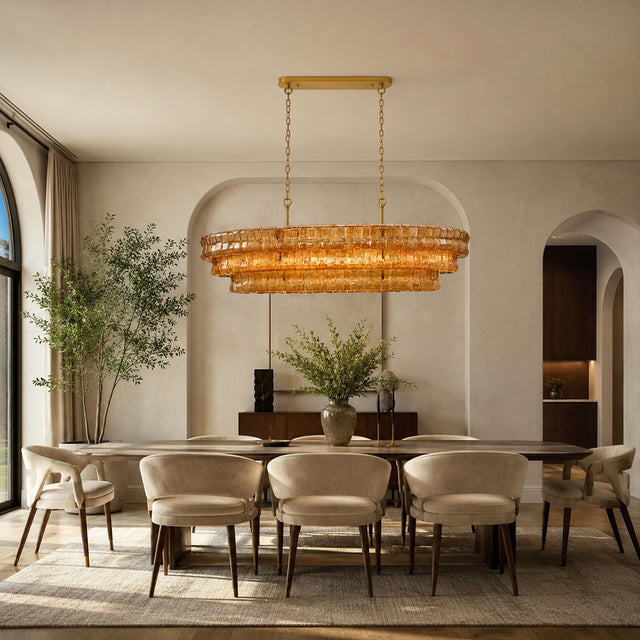
Match the Chandelier Shape to Your Table
Not sure which chandelier shape fits your table? See our Round vs. Linear Chandelier Guide.
| Dining Table | Lighting Direction |
|---|---|
| Round Table | Round Chandelier |
| Square Table | Round or Geometric Chandelier |
| Rectangular Table | Linear or Oval Chandelier |
| Kitchen Island | Linear Fixture or Multiple Pendants |
4. Create Small Pools of Light in the Living Room
In the living room, use the main chandelier to anchor the seating area, then create smaller pools of light around a sofa, fireplace, reading chair, artwork, or console. Dimming helps these layers shift from practical daytime lighting to a softer evening atmosphere.

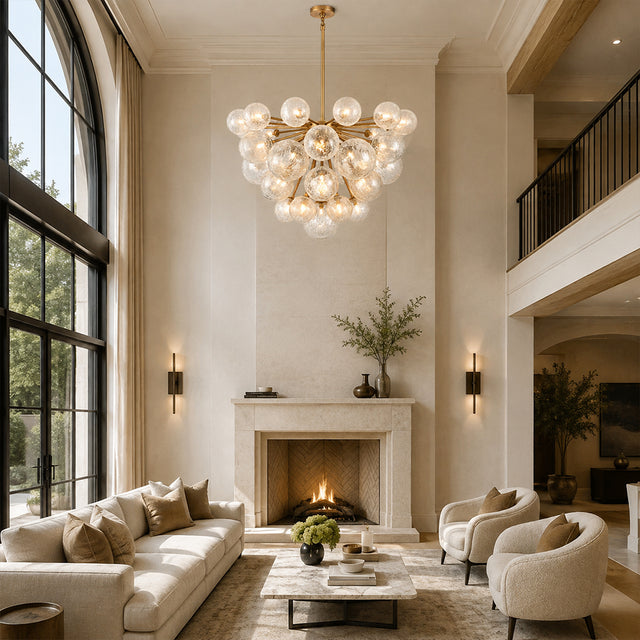
5. Move Some of the Light Away From the Ceiling
If your room already has a beautiful chandelier but still feels flat at night, the missing layer may be on the walls.
A wall sconce brings illumination closer to eye level. It can soften hallways, frame artwork, emphasize a fireplace, or create a comfortable bedside layer without asking the ceiling fixture to provide all the light.


Mira Alabaster Wall Sconce 21"H
Natural Spanish alabaster and a streamlined gold-finished base give Mira a soft, warm presence. Its natural veining makes each piece visually individual, while the compact vertical form suits bedrooms, hallways, bathrooms, and foyers.
View Mira Wall Sconce6. Choose Warm Light Without Making Everything Yellow
“Warm lighting” should not mean turning the entire room orange. A sophisticated warm lighting scheme comes from several elements working together: diffusion, dimming, material, placement, and the surfaces surrounding the fixture.
Alabaster can soften illumination through translucent stone. Textured glass can refract light and create visual depth. Brass and natural wood can make the room feel warmer even without dramatically changing the color of the light itself.
7. Let One Statement Fixture Do More
You do not need to replace every light fixture for fall. Focus on the fixture with the greatest visual impact: a chandelier above the dining table, a sculptural pendant in the foyer, or a large round chandelier anchoring the living room. Choose a statement piece that adds character without depending on seasonal decoration.


GeoLume Fluted Glass Round Chandelier 36"D
Layered amber glass gives GeoLume sculptural depth while thick curved glass helps create soft ambient illumination. The 36-inch round form works as a focal point across dining rooms, living areas, and entryways.
For glass color, texture and sizing, see our GeoLume Glass Chandelier Guide.
Explore GeoLumeFall Lighting by Room
Every room has a different purpose, so your fall lighting plan should change with it. Instead of repeating the same formula everywhere, decide where each room needs ambient, accent, or lower-level illumination.

Dining Room
Statement Chandelier + Warm Table Lighting
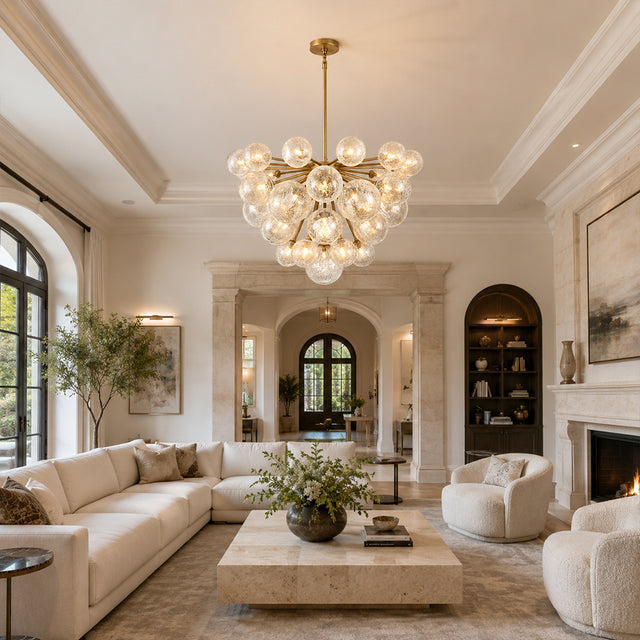
Living Room
Layered Light + Warm Accent Lighting
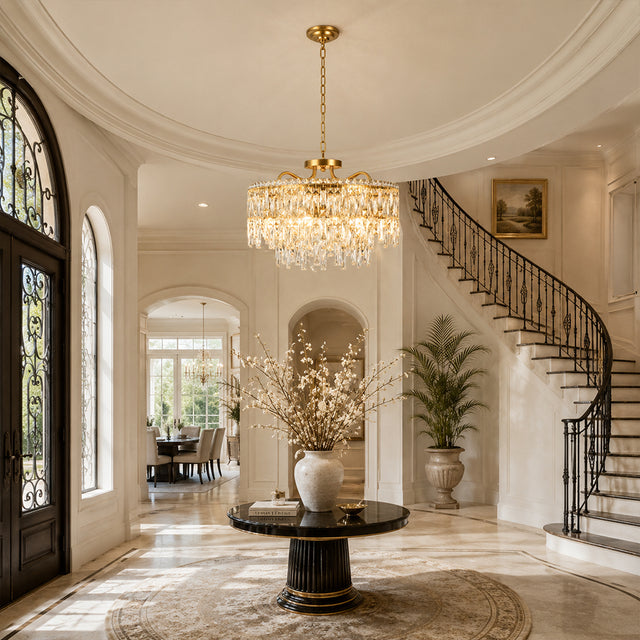
Entryway
Sculptural Fixture + Warm Welcome
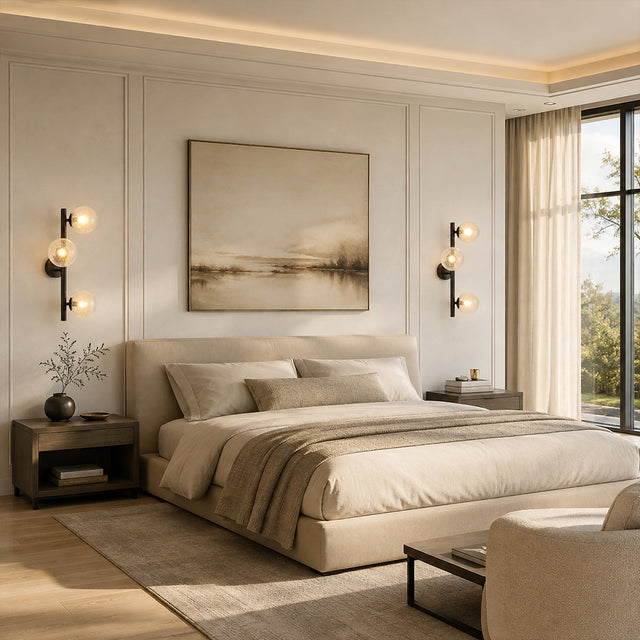
Bedroom
Soft Wall Lighting + Low-Glare Illumination
A Simple Fall Lighting Checklist
Before buying a new fixture, walk through the room after sunset and ask a few simple questions. This often reveals lighting problems that are less obvious during daylight.
✓ Does the room rely on only one overhead light?
✓ Can the main fixture be dimmed where appropriate?
✓ Are important areas illuminated at different heights?
✓ Does the fixture material add warmth even when switched off?
✓ Is the chandelier properly scaled to the furniture below?
✓ Are artwork and architectural details receiving enough accent light?
✓ Does the room still feel comfortable after sunset?
Common Fall Lighting Mistakes to Avoid
1. Making Every Corner Equally Bright
Uniform brightness can make a room appear visually flat. Allow some areas to remain softer so focal points and architectural details have more impact.
2. Choosing a Chandelier That Is Too Small
A beautiful fixture can still feel wrong when the scale does not match the dining table, seating arrangement, ceiling height, or overall room.
3. Using Only Overhead Lighting
A chandelier provides an important ambient layer, but wall sconces and lower-level sources can add the depth that makes an evening interior feel comfortable.
4. Mixing Too Many Color Temperatures
Different light sources do not always need to use exactly the same color temperature, but large differences can make a room feel visually disconnected. If a chandelier is warm while recessed lights or sconces appear noticeably cooler, the contrast may become distracting after sunset. When possible, keep the main light sources in the same room within a compatible warm range.
Frequently Asked Questions About Fall Lighting
What type of lighting makes a home feel cozy in fall?
Layered lighting is a practical starting point. Combine ambient ceiling lighting with wall sconces and lower-level accent sources rather than relying on one bright fixture.
What color lighting is best for fall?
A warm, soft atmosphere generally works better than an obviously yellow or orange room. Diffusion, fixture material, dimming, and surrounding surfaces all affect how warm the final space feels.
What lighting materials work well in fall interiors?
Alabaster, textured glass, brass, wood, and stone work especially well because they introduce texture and warmth without requiring obvious autumn motifs.
Do I need to replace all my lighting for fall?
No. Start with the room you use most after sunset. Improving one primary fixture or adding a missing secondary lighting layer can have a greater effect than changing every fixture in the home.
Create a Home That Feels Warm Beyond Fall
The best fall lighting doesn't have to look seasonal. It should simply make your home feel warmer, calmer, and more inviting.
Natural materials bring texture, layered lighting adds depth, and thoughtful scale connects each fixture to the room around it. Together, these ideas create a home that feels warm and inviting through fall—and every season after it.
Explore MUNEST Collections